Washer leak repair covers leak sources tracked down and fixed: supply hoses, the door seal or gasket, the drain pump, the tub seal, and the inlet valve. A local provider finds where the water is coming from and repairs the faulty part.
A washer leak is unsettling because water goes where it should not, and the damage spreads while the source stays hidden. But a leak always has a source, and the source is usually one of five things: a supply hose, the door seal, the drain pump, the tub seal, or the inlet valve.
The first clue is where the water appears. A leak at the front of the machine points to the door seal. A leak at the back points to the supply hoses or the inlet valve. A leak underneath points to the drain pump or the tub. A leak that appears only during the spin points to the door seal or the tub. A leak that appears all the time, even when the machine is off, points to a supply hose or an inlet valve that will not close.
Supply hoses
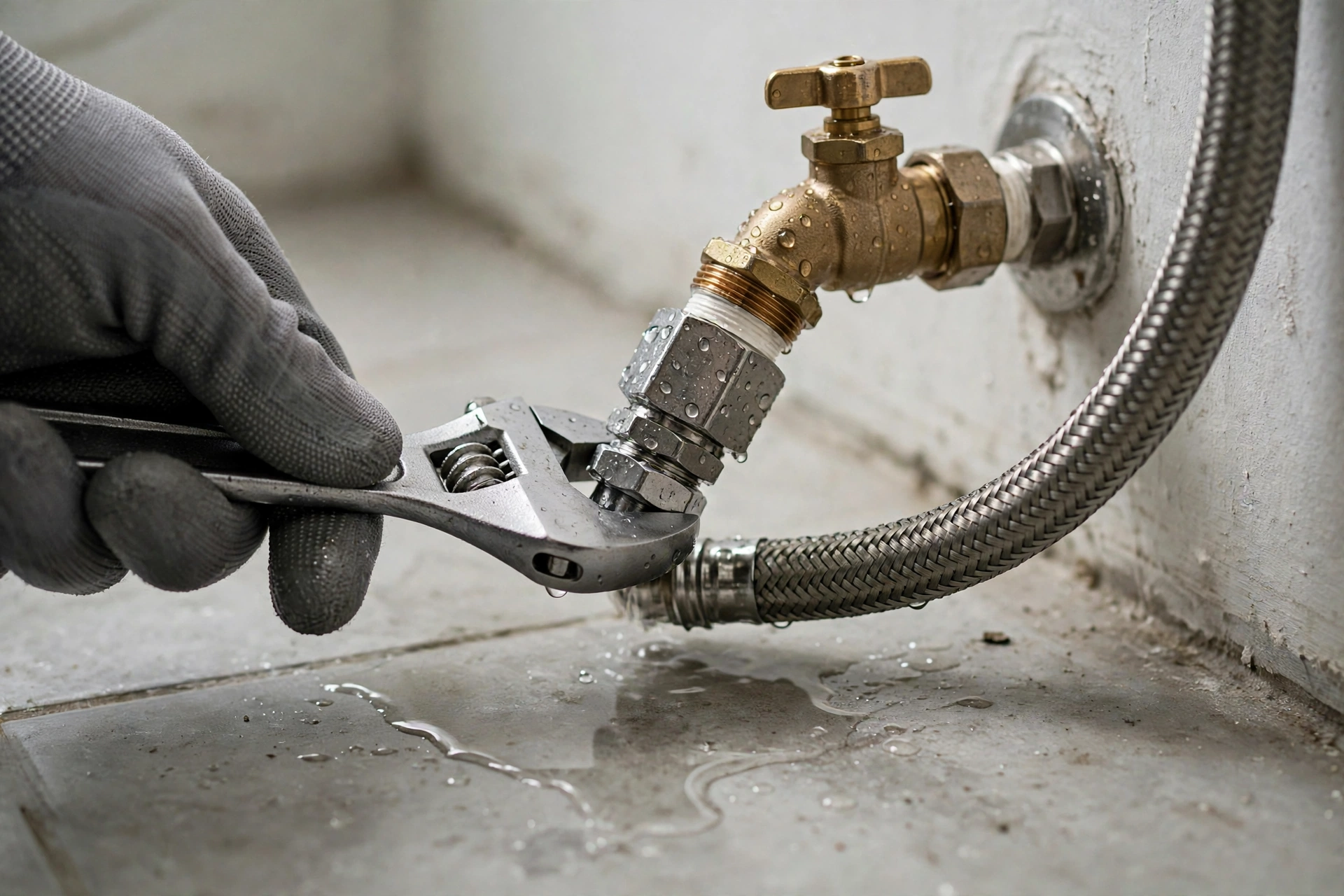
Supply hoses are the most common source of a serious leak. The hot and cold hoses carry water at full pressure into the machine, and when one splits, the water does not stop. Rubber hoses age, bulge, and eventually split; braided steel hoses last longer and are the usual replacement.
A hose leak shows up at the back of the machine, or as water on the floor behind it. The valves behind the machine should be checked too — a valve that will not close fully leaks at the stem, and a valve that has seized cannot be closed in an emergency.
When a new machine goes in, the hoses should go with it if they are old. A new machine on old rubber hoses is the most common cause of a leak in the first month.
Door seal and gasket
The door seal on a front-load washer keeps the water in, and when it tears, hardens, or traps debris, water escapes from the front of the machine. The leak usually appears during the wash or spin, when the drum is full and moving.
A seal that has gone hard with age no longer presses evenly against the door, and water finds the gap. A seal with a tear leaks in the same place every time. A seal with debris trapped in its folds leaks until the debris is cleared.
Replacing a seal is a proper repair. The old seal comes out, the seat is cleaned, and the new seal is fitted and checked with a full cycle. Wiping the seal dry after use and leaving the door open between washes slows mould down, but it does not fix a torn seal.
Drain pump and tub
A leak from underneath the machine usually means the drain pump or the tub seal. The drain pump pushes water out after every wash, and when its housing cracks or its seal fails, water escapes underneath. The tub seal keeps water in the tub; when it fails, water leaks from the bottom of the machine.
A pump leak is found by running the machine and watching underneath during the drain. A tub seal leak shows up as water under the machine after a wash, with no leak visible at the hoses or the door.
Both are proper repairs. The pump is replaced, or the tub seal is replaced, and the machine is run through a full cycle to confirm the leak is gone.
Inlet valve
The inlet valve controls water coming into the machine. When it works, it opens to fill and closes to stop. When it sticks open, water keeps flowing even when the machine is off, and the drum overfills. When it sticks closed, the machine does not fill at all.
A valve that sticks open causes a leak that does not stop, and the first step is to close the supply valves behind the machine. The valve is then replaced, and the machine is tested through a full cycle.
Hard water is a factor in valve faults. Scale builds up inside the valve, and the valve sticks. The provider checks the valve and the supply, because a scaled valve and a scaled hose often fail together.
Detergent drawer and overloading
Not every leak is a broken part. Too much detergent creates excess suds, and the suds force their way out of the dispenser drawer and the door seal. The leak looks like a seal fault, but the seal is sound — the detergent is the cause.
Overloading does the same thing in a different way. Too much laundry in the drum pushes water over the top of the tub, and the water escapes during the wash or spin. Loading the drum loosely and using the right amount of detergent prevents both.
A leaking detergent drawer can also be a blocked dispenser. Detergent residue builds up in the drawer and the housing, and the water cannot flow through properly. Cleaning the drawer and housing clears it.
What affects the cost of a leak repair
The source is the main factor. A supply hose and a pump filter are small jobs; a door seal and a drain pump are medium jobs; a tub seal is a larger one. The provider explains the cost before the work starts, including which part is needed and what the repair involves.
The damage around the leak matters too. A leak that has been running for a while can damage flooring and baseboards, and the provider will say what they can see. Stopping the leak is always the first step, and that part of the visit is straightforward.