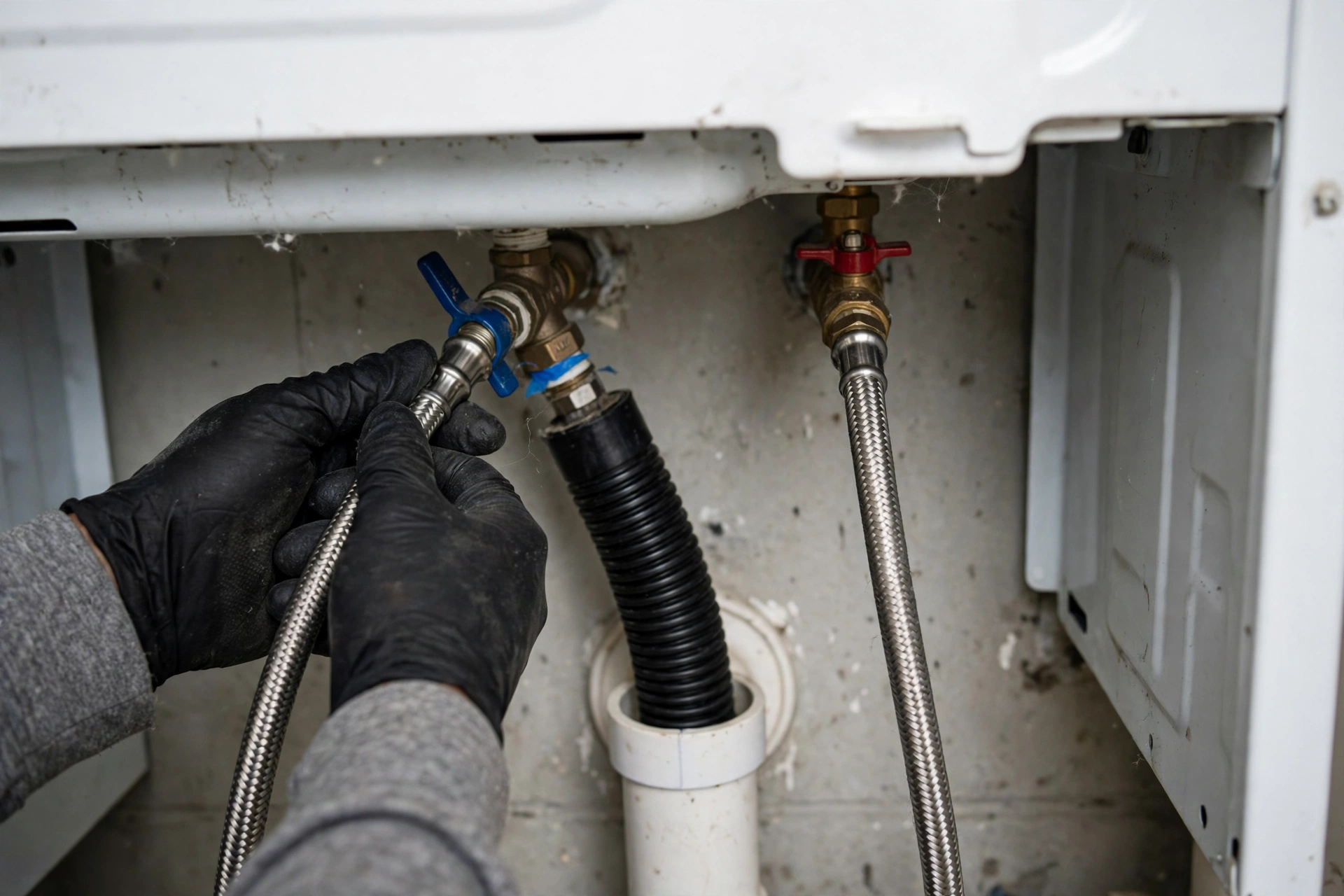
Washer installation covers new installs, old-washer replacement and haul-away, water supply and drain hookups, levelling, and first-run checks. The machine is connected, levelled, and run through a full cycle before the visit ends.
Installing a washer looks simple — two hoses, a drain, a power plug — but the details decide whether the machine works quietly for years or shakes, leaks, and wears out early. The machine must be level, the hoses must be sound and properly connected, the drain hose must sit at the right height, and the machine must be tested through a full cycle.
Replacement adds one more job: the old machine. Providers disconnect it, move it out, and haul it away, so the new machine goes into a clear space. If the old machine is being replaced because it failed, the provider can also say whether the fault was worth repairing — useful if the decision is still open.
New washer installation
A new washer installation starts with the space. The provider checks the floor is level and strong enough, the supply valves work, the drain is clear, and there is enough room for the machine and its hoses. A washer in a tight closet needs different care from one in an open laundry room.
The machine is then connected: hot and cold supply hoses to the valves, the drain hose into the standpipe or laundry tub, and the power plug into a grounded outlet. Hoses are checked for kinks and for the right length — a hose under tension pulls at the valve and leaks sooner. Braided steel hoses are used where the old rubber hoses have aged.
Once connected, the machine is levelled with its feet and a spirit level. A level machine spins quietly and does not walk across the floor. Then it is run through a full cycle with no laundry inside, so the fill, wash, drain, and spin are all tested before the visit ends.
Old-washer replacement and haul-away
Replacing a washer means removing the old one first. The provider disconnects the hoses and drain, drains any remaining water from the machine, and moves it out. The old machine is hauled away, so you do not need to arrange disposal yourself.
Before the old machine goes, the provider can check whether the fault was worth repairing. A failed lid switch on a five-year-old machine is a repair; a failed control board on a fifteen-year-old machine is usually a replacement. That judgement is worth having before you buy, not after.
The new machine is then installed in the same space, with the hoses and drain checked as part of the job. If the old hoses are worn, they are replaced at the same time — a new machine on old hoses is the most common cause of a leak in the first month.
Hookups: water, drain and power
Water hookups are the hot and cold supply valves behind the machine. Both should turn freely and shut off fully; a valve that will not close is replaced as part of the job. The hoses connect to the valves with washers that seal the joint, and the connections are checked for drips with the water on.
The drain hose must sit at the right height in the standpipe — high enough that water does not siphon back into the machine, low enough that the pump can push water out. A drain hose pushed too far down the standpipe causes siphoning; one left lying on the floor floods the room.
Power is a grounded outlet on its own circuit where possible. Extension leads are not used for washers. If the outlet is damaged or the machine trips the breaker, the provider will say so plainly rather than work around it.
Levelling and first-run checks
Levelling is the step most often skipped, and it causes the most complaints. An unlevel washer shakes, walks across the floor, and wears its suspension out early. The provider levels the machine with its adjustable feet and checks it with a spirit level, front to back and side to side.
The first run is a full cycle with no laundry. The provider watches the fill, listens for the wash, checks the drain, and watches the spin. Any leak, any unusual noise, or any failure to drain is caught here, while the provider is still in the house.
The visit ends with the machine running properly and the space left clean. The old machine is gone, the hoses are sound, and the machine has passed a full cycle.
Repair or replace: how to decide
The decision comes down to three things: the age of the machine, the cost of the part, and how much life the machine has left. A machine under eight years old with a failed pump, switch, or belt is usually worth repairing. A machine over twelve years old with a failed control board or drum bearing usually is not.
Parts availability matters too. Common brands usually have parts available for many years. Rare or discontinued models can need parts that take weeks to find, and that wait is part of the decision.
A provider who repairs machines every day can give an honest answer to the repair-or-replace question, because they see which machines keep going and which ones come back with the next fault a month later.
What affects the cost of installation
The main factors are the machine itself and the space it goes into. A straightforward swap in an open laundry room is a simple job. A stacked pair in a tight closet, a machine that needs new supply valves, or a drain that needs clearing takes longer.
Haul-away of the old machine, new hoses, and any valve work are part of the job and are explained before the work starts. There are no surprises: the provider explains what is included and what the old machine's removal involves.