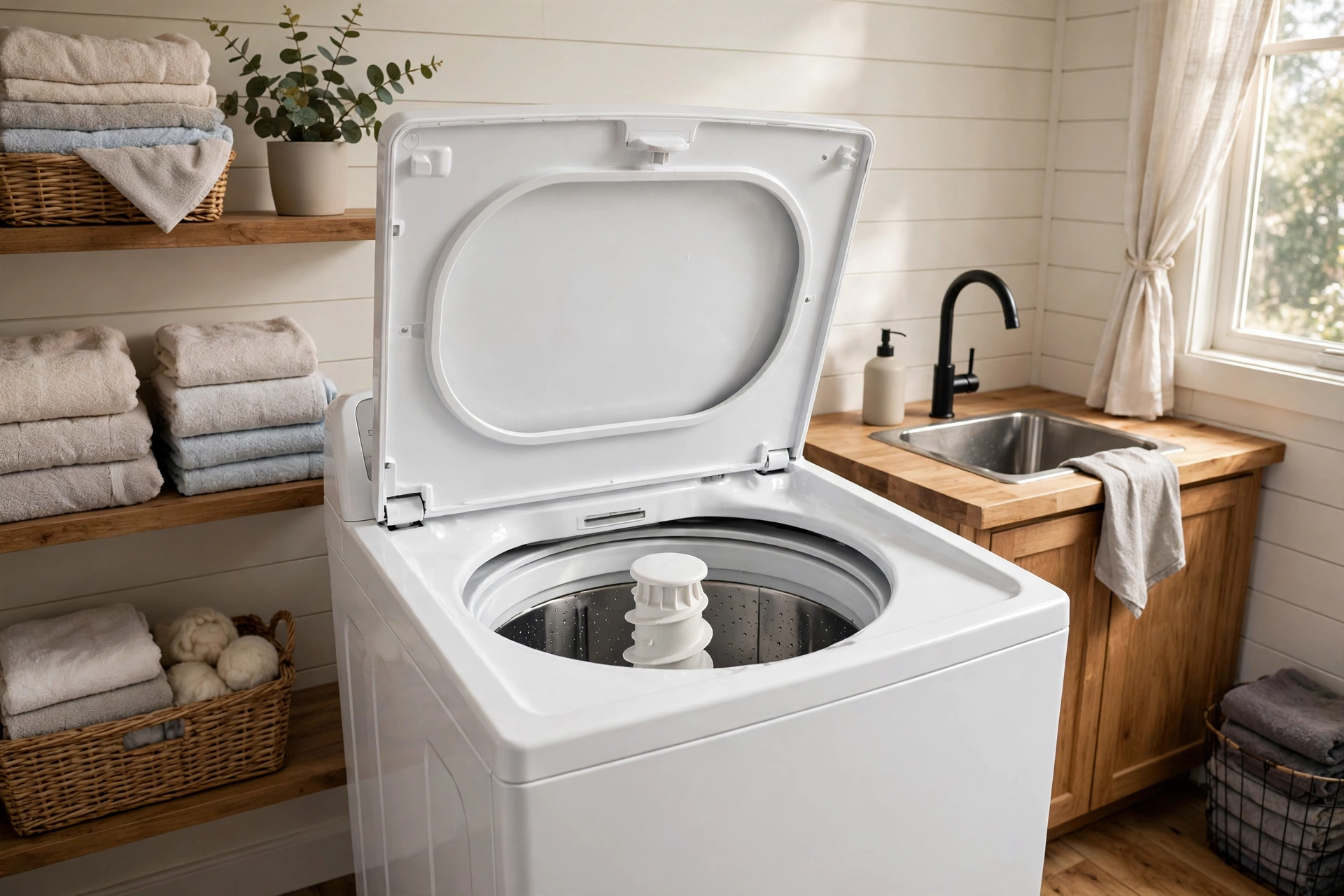
Maytag washer and dryer repair covers Bravos washers that will not spin or will not start, dryers that will not dry or make noise, thermostat faults, and error code F9E1. A local provider diagnoses the machine at your home and repairs the faulty part.
Maytag has a long reputation for sturdy machines, and the Bravos line is the one providers see most often in North Carolina homes. Bravos washers are usually top-load machines with an impeller or agitator, and their faults are the faults of hard-working top-loaders: lid switches, drive belts, motor couplings, and suspension.
Maytag dryers are usually electric or gas machines with a simple, sturdy design. Their faults are usually the heating element, the thermostat, or the belt. Parts for Maytag machines are usually easy to find, because the design has changed little over the years.
Common Maytag faults at a glance
- F9E1 drain error
- Lid switch failure
- Washer will not spin
- Washer will not start
- Dryer not drying
- Noisy dryer
Maytag Bravos won't spin or won't start
A Maytag Bravos washer that will not spin usually has a lid switch fault, a worn drive belt, or a broken motor coupling. The lid switch tells the machine the lid is closed; if it does not engage, the machine will not spin for safety. A drive belt that has stretched or snapped cannot turn the drum.
A Bravos washer that will not start at all usually has a power fault, a lid switch fault, or a control board fault. The provider checks the power first — the outlet, the breaker — then the lid switch, then the control board.
A Bravos XL that will not turn on is usually the same story: power, lid switch, or control. The provider tests each one in order, because replacing the wrong part does not fix the fault.
Maytag dryer not drying or making noise
A Maytag dryer that will not dry usually has a heating fault — the heating element, the thermostat, or the thermal fuse on an electric dryer, or the igniter or gas valve on a gas dryer. A blocked vent can also cause the thermal fuse to blow and the heat to stop.
A Maytag dryer that makes noise usually has a worn belt, a worn idler pulley, or worn drum rollers. A bad thermostat is another common Maytag dryer fault: the dryer heats but never reaches the right temperature, or it overheats and shuts off.
The provider tests the heating parts, the belt, and the vent in order, because a dryer that takes too long to dry can be a vent problem rather than a heating problem.
Error code F9E1 on Maytag washers
Error code F9E1 on a Maytag washer points to a drain fault — usually the drain pump or the drain hose. The code appears when the machine cannot drain within the time it expects, and the drum stays full.
The pump filter is checked first. It catches coins, hair, and lint before they reach the pump, and when it clogs the water has nowhere to go. If the filter is clear and the machine still will not drain, the pump is tested.
Write the code down exactly before switching the machine off and on again, because the code is the fastest clue to the fault.
Repair or replace a Maytag machine
The repair-or-replace question comes down to the age of the machine, the cost of the part, and how much life the machine has left. A Maytag machine under ten years old with a failed lid switch, belt, or thermostat is usually worth repairing — these are sturdy machines, and the parts are usually available.
A machine over twelve years old with a failed control board or transmission is a different decision. The provider will give an honest answer once the fault is known.
What to tell your provider about your Maytag machine
Tell the provider the brand, the model number, and the fault in your own words. The model number is usually on a label inside the door or on the back of the machine, and it matters more than the brand name alone — two Maytag machines from different years can use different pumps, different door locks, and different control boards. If the machine shows an error code, write it down exactly before switching the machine off and on again, because the code can clear when the machine restarts.
Say when the fault started and whether it has happened before. A fault that comes and goes points to a different cause than a fault that is there every cycle. Say whether the machine fills and drains normally, whether the drum turns, and whether the door or lid locks. If the machine is leaking, say where the water appears. Those details are usually enough for a provider to bring the right part for your Maytag machine on the first visit.